
CA21154 - Translational control in Cancer European Network (TRANSLACORE)
TRANSLACORE
Understanding the importance of protein synthesis dysregulation in cancer
CA21154 - Translational control in Cancer European Network (TRANSLACORE)
Translacore
Join the Network
CA21154 - Translational control in Cancer European Network (TRANSLACORE)
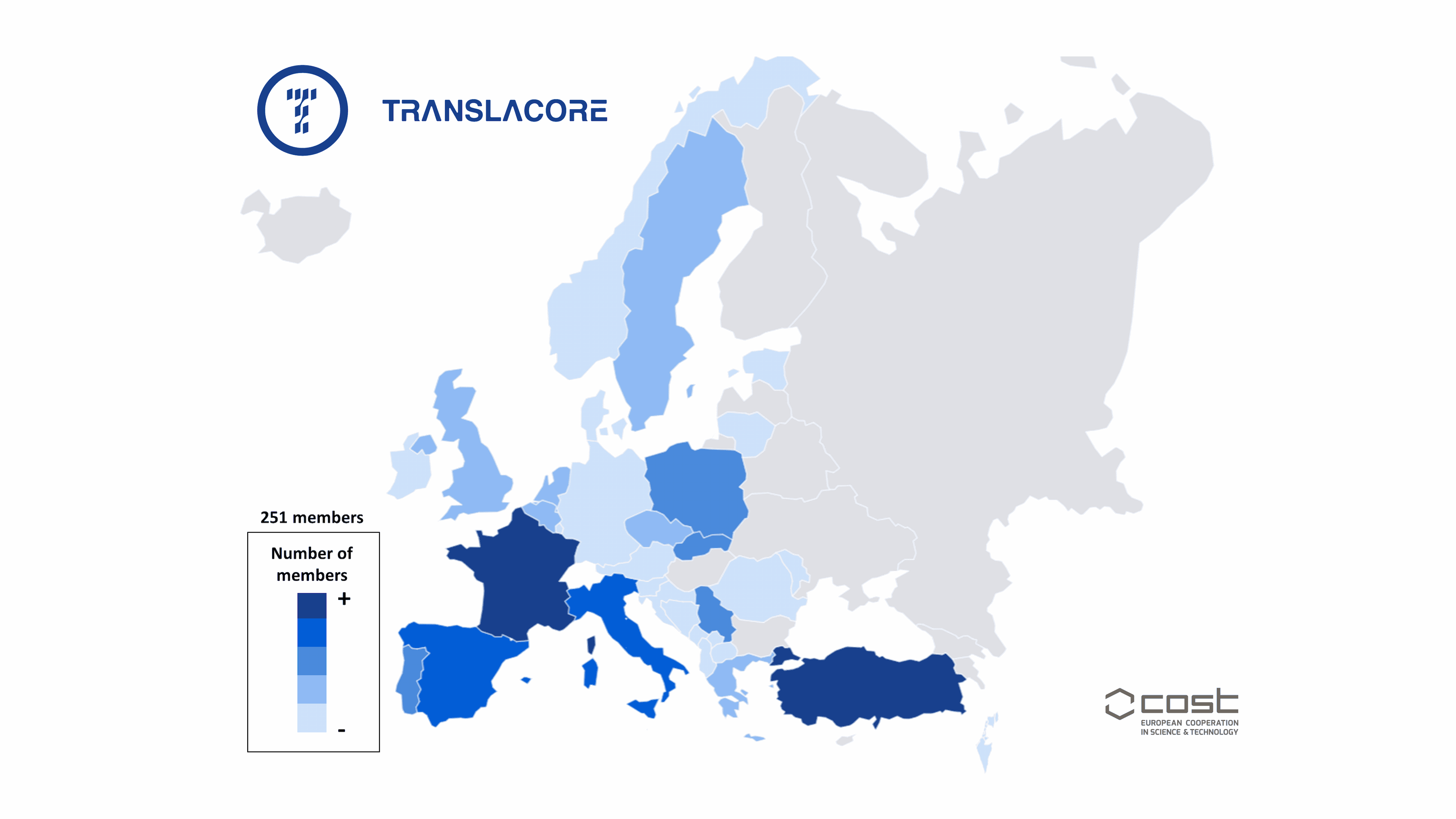
Map of TRANSLACORE Team Members Across Europe
Our aims
Philosophy
Understanding the importance of protein synthesis dysregulation in cancer
Objectives
Promoting multiple cross-disciplinary research partnerships
Capacity Building
Strengthen scientific interactions among experts across Europe with complementary skills
State of the art
Dysregulated translation in cancer exposes vulnerabilities that are amenable to targeted therapies.
People involved in Translacore
View all members



You might also like
Translacore open database

Gallery - the EMBO workshop Ribosome Synthesis: from Mechanisms to Therapy
TRANSLACORE organized a co-located meeting at the EMBO workshop Ribosome Synthesis: from Mechanisms to Therapy 13th Edition meeting, taking place from Sunday 7th – Friday 12th September 2025 at Churchill College, Cambridge, UK

the EURECA consortium
EURECA — the European Epitranscriptomics of Cancer Academy — is a training and research programme focused on RNA modifications in cancer. These chemical changes to RNA, once overlooked, are now recognised as important drivers of cancer initiation and progression. By studying them, EURECA researchers aim to improve early detection, prediction, and treatment focusing on prostate cancer, neuroblastoma and glioma.

Post-Doctoral Position in the field of Translational Control in Cancer
Post-doctoral Position for a full-time position at the Biffo’s lab, at the National Institute of Genetics (www.ingm.org)